
Instructional Routines for Older Dysfluent Readers: An Overview
Instructional routines, mirroring cultural and religious observances globally, offer varied support; from choral reading to tech-enhanced platforms, aiding older readers’ fluency.
Understanding Dysfluent Reading in Older Students
Dysfluent reading in older students extends beyond simple decoding issues, often stemming from a complex interplay of phonological awareness deficits, weak decoding skills, and limited vocabulary. Unlike younger learners, older students may exhibit greater awareness of their reading difficulties, leading to frustration, anxiety, and decreased motivation. This can manifest as slow reading speed, inaccurate word recognition, and a lack of prosody – reading with appropriate expression and phrasing.
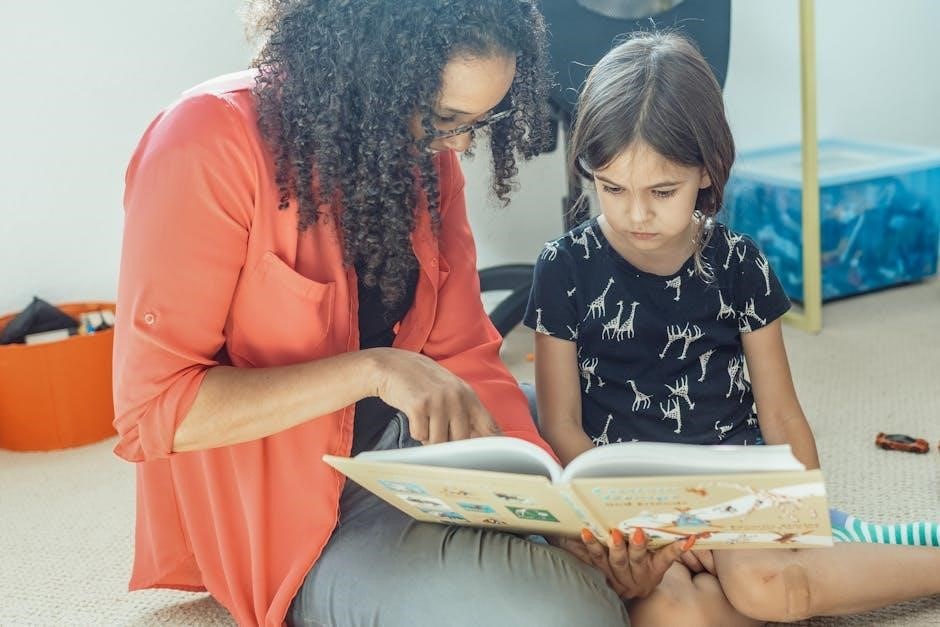
Furthermore, cultural and religious contexts, like those observed in varied holiday celebrations globally, highlight the importance of individualized support. Just as observances differ, so too do student needs. Addressing dysfluency requires a nuanced understanding of these underlying factors and the implementation of targeted instructional routines designed to build foundational skills and foster a positive reading experience.
The Impact of Dysfluency on Comprehension
Dysfluent reading significantly hinders comprehension, as cognitive resources are diverted from understanding the text to the laborious process of decoding. When students struggle to accurately and rapidly recognize words, their working memory becomes overloaded, leaving limited capacity for constructing meaning. This impacts their ability to make inferences, identify main ideas, and retain information.
Similar to how diverse cultural celebrations (like those in France and Tunisia) require understanding context, reading comprehension demands fluent decoding. Without it, students miss crucial connections. Effective instructional routines must therefore prioritize building fluency alongside comprehension strategies, recognizing that these skills are inextricably linked, fostering a richer, more meaningful reading experience.

Foundational Routines for Building Fluency
Establishing a base, like recognizing regional holidays in Portugal, requires focused practice; repeated reading and partner work build essential decoding and prosody skills.
Repeated Reading Strategies
Repeated reading, a cornerstone of fluency development, involves having students read the same passage multiple times with increasing speed and accuracy. This mirrors the consistent celebration of religious holidays, like those in Morocco, reinforcing key elements through repetition. Initially, students may read aloud with teacher support, focusing on decoding and phrasing. Subsequent readings prioritize speed and expression, aiming for automaticity.
Progress monitoring is crucial, tracking words correct per minute (WCPM) to demonstrate growth. Like the varied holiday schedules across Luxembourg, adjustments can be made based on individual needs. This strategy builds confidence and reduces cognitive load, freeing up mental resources for comprehension – similar to how familiar celebrations become easier to observe over time.
Choral Reading Implementation
Choral reading, akin to communal celebrations like those in Réunion, fosters a supportive environment where students read aloud together. The teacher models fluent reading, and students join in unison. This reduces anxiety, particularly for struggling readers, as they blend their voice with the group. It’s beneficial to start with shorter passages and gradually increase complexity, mirroring the evolution of cultural traditions.
Variations include echo reading, where students repeat phrases after the teacher, and antiphonal reading, alternating between groups. Like the diverse religious observances in France, choral reading can be adapted to suit different learning styles. Focus on phrasing and prosody, encouraging students to read with expression and appropriate pacing, building confidence and fluency.
Echo Reading Techniques
Echo reading, similar to the repetition in religious passages celebrated globally, is a powerful technique for building fluency. The teacher reads a short phrase or sentence, modeling appropriate prosody and pacing. Students then “echo” the phrase verbatim, attempting to match the teacher’s expression. This immediate imitation provides valuable auditory and kinesthetic feedback, much like learning through cultural chants.
Begin with simple sentences and gradually increase the length and complexity. Encourage students to focus on mimicking the teacher’s intonation and phrasing. Like the legal holidays in Luxembourg, consistency is key. Echo reading builds confidence and automaticity, reducing cognitive load and freeing students to focus on comprehension.
Partner Reading Protocols
Partner reading, akin to collaborative celebrations across cultures like those in Réunion, fosters a supportive environment for fluency development. Students read aloud to each other, taking turns as reader and listener. This provides repeated practice and opportunities for peer feedback, mirroring the communal aspect of many holidays.
Careful pairing is crucial – match students with differing fluency levels strategically. The listener provides encouragement and gentle correction, focusing on accuracy and rate. Like the fixed holidays in Muslim-majority countries, structure is important. Implement clear roles and expectations to maximize engagement and ensure both partners benefit from this reciprocal learning experience.
Round Robin Reading Modifications

Traditional round robin reading, while seemingly inclusive like universally observed holidays, can induce anxiety in dysfluent readers. Modifications are essential. Instead of solely focusing on oral reading, incorporate “think-pair-share” moments after each student’s turn. This allows processing time and reduces performance pressure, mirroring the reflective nature of religious observances.
Further, limit the amount read per turn to manageable chunks. Pre-reading the passage silently beforehand builds confidence. Like the varying regional holidays in Portugal, adapt the activity to student needs. Focus on supportive feedback, emphasizing effort and progress, rather than solely correcting errors. This fosters a safer, more productive learning environment.
Paired Reading with Feedback
Paired reading, akin to collaborative celebrations across cultures, offers a supportive context for fluency development. Students alternate reading aloud in short segments, with the stronger reader providing subtle support – modeling fluent reading and offering gentle corrections, similar to guidance during religious practices.
Crucially, feedback should be constructive and specific, focusing on prosody, accuracy, and rate. Avoid interrupting mid-sentence; instead, offer suggestions after each segment. Like the legal holidays in Luxembourg, establish clear expectations for both roles. Encourage the stronger reader to praise effort and strategy use, fostering a positive dynamic. This builds confidence and reduces anxiety, mirroring a supportive community.

Targeted Routines for Specific Fluency Components
Targeted routines, like diverse cultural festivals, address specific needs – phonological awareness, decoding, and morphological skills – for improved reading fluency.
Phonological Awareness Routines
Phonological awareness, much like recognizing diverse religious celebrations, forms a crucial foundation for fluent reading. For older students, routines must move beyond basic skills. Blending and Segmenting Activities involve manipulating sounds within words – orally at first, then connecting to written form. This could include saying sounds in a word slowly and then quickly, or breaking a word into its individual sounds.
Rhyme Recognition and Generation builds upon this, encouraging students to identify rhyming words and create their own. Activities might involve completing rhyming sentences or generating lists of words that rhyme with a given word. These routines aren’t simply about fun; they strengthen the neural pathways essential for decoding and automaticity, mirroring how cultural traditions reinforce shared understanding.
Blending and Segmenting Activities
Blending and Segmenting Activities, akin to understanding the components of a cultural festival, are foundational. Begin with oral blending – the teacher says sounds (/c/ /a/ /t/) and the student says the whole word (“cat”). Progress to segmenting, where students break apart words into individual sounds. Use manipulatives like counters or Elkonin boxes to visually represent sounds.
Introduce more complex sounds like digraphs and blends. Activities should be multi-sensory and engaging, moving beyond simple repetition. For example, students can blend sounds to reveal a hidden picture or segment words to build a LEGO structure. These routines build phonemic awareness, crucial for decoding and reading fluency, much like recognizing the significance of each element within a tradition.
Rhyme Recognition and Generation
Rhyme Recognition and Generation, similar to identifying patterns in celebrations, strengthens phonological awareness. Start with identifying rhyming pairs – “cat” and “hat.” Then, move to generating rhymes; provide a word (“blue”) and ask students to brainstorm rhyming words. Utilize picture cards, allowing students to match rhyming images.
Introduce non-rhyming pairs to reinforce the concept. Games like “Rhyme Time Bingo” or creating rhyming poems can increase engagement. Focus on the sound structure, not just spelling. This skill supports decoding and fluency, as recognizing rhyming patterns aids in predicting and processing words, mirroring how cultural understanding enriches interpretation.
Decoding and Encoding Practice
Decoding and Encoding Practice, akin to translating diverse cultural practices, builds foundational skills. Begin with explicit instruction on syllable types – closed, open, vowel-consonant-e, etc. – applying this to multisyllabic words. Teach students to break down words into manageable parts, utilizing prefixes, suffixes, and root words, much like understanding historical context.
Encoding (spelling) reinforces decoding. Dictate words and have students segment sounds and represent them with letters. Morphological awareness – understanding word parts – is crucial. Activities could involve building words with affixes or identifying base words. Consistent practice, mirroring regular observance of traditions, solidifies these skills.
Multisyllabic Word Attack Strategies
Multisyllabic Word Attack Strategies, similar to deciphering complex cultural celebrations, require systematic instruction. Teach students to locate vowel patterns within syllables – a key to unlocking pronunciation. Emphasize chunking words into syllables, using visual cues like slashes (e.g., hap-pi-ness). Explicitly teach common syllable divisions (VC/CV, V/CV, VC/V).
Model “sounding out” each syllable individually, then blending them together. Encourage students to identify prefixes and suffixes as “fast forward” clues. Provide ample practice with decodable multisyllabic words, gradually increasing complexity. This mirrors the consistent practice needed to understand intricate traditions.
Morphological Awareness Instruction
Morphological Awareness Instruction, akin to understanding the roots of cultural holidays, boosts reading fluency. Explicitly teach common prefixes (un-, re-, pre-) and suffixes (-ing, -ed, -er) and their meanings. Demonstrate how adding or removing morphemes changes a word’s meaning. For example, “happy” becomes “unhappy.”
Engage students in activities that involve breaking down words into their morphemic components. Utilize graphic organizers to visually represent word parts. Connect morphological knowledge to vocabulary development and comprehension. This approach, like recognizing religious symbolism, deepens understanding and unlocks meaning within complex words.

Advanced Fluency Routines
Advanced routines, like cultural celebrations, build on foundations; Reader’s Theater and timed readings enhance prosody, automaticity, and overall reading performance.
Prosody Focused Reading
Prosody, the rhythm and expression in reading, is often overlooked in fluency work, yet it’s crucial for comprehension. Instructional routines targeting prosody move beyond simply decoding words correctly to how those words are read. Like cultural performances with specific intonations, prosodic reading requires deliberate practice.
Reader’s Theater applications are excellent for this. Students practice reading scripts aloud, focusing on character voices, pacing, and emotional expression. This collaborative activity encourages attention to punctuation and phrasing. Chanting and performance reading, similar to religious recitations, can also be used to emphasize rhythm and intonation. Selecting texts with rich dialogue and varied sentence structures provides ample opportunity for prosodic expression, ultimately improving comprehension and engagement.
Reader’s Theater Applications
Reader’s Theater transforms reading practice into a performance, boosting engagement and prosody. Students rehearse and perform scripts derived from stories or informational texts, focusing on expressive reading. Like cultural celebrations with scripted elements, Reader’s Theater demands attention to character voices, pacing, and phrasing.
This routine is particularly effective for older, dysfluent readers as it reduces cognitive load – decoding is less demanding with repeated readings. The collaborative nature fosters a supportive environment, mirroring communal religious practices. Scripts can be adapted to various reading levels, and roles can be assigned based on student strengths. Regular practice builds confidence and improves fluency, ultimately enhancing comprehension and enjoyment of reading.
Chanting and Performance Reading
Chanting and performance reading inject rhythm and intonation into reading, mirroring the cadence of cultural or religious chants. Students read texts with deliberate phrasing and emphasis, often accompanied by rhythmic patterns or vocal variations. This technique encourages prosodic reading, focusing on expression and meaning beyond mere decoding.
For older dysfluent readers, this routine can unlock fluency by reducing self-consciousness and promoting automaticity. Like participating in a communal celebration, it fosters a sense of shared experience. Selecting texts with strong poetic qualities or dramatic potential enhances engagement. The performance aspect builds confidence and encourages students to take risks with their reading, ultimately improving both fluency and comprehension.
Automaticity Building Exercises
Automaticity building exercises are crucial for older dysfluent readers, akin to memorizing key phrases in a cultural tradition. These routines aim to reduce cognitive load by enabling rapid word recognition, freeing up mental resources for comprehension. Focusing on high-frequency words, similar to foundational religious texts, is paramount.
Sight word drills, though sometimes perceived as rote, are effective when implemented strategically. Timed reading activities, with consistent progress monitoring, provide quantifiable data and motivate students. Like practicing a performance, repetition builds confidence and speed. The goal isn’t just speed, but accurate and effortless decoding, mirroring fluent speech patterns.
Sight Word Drills (with a focus on high-frequency words)
Sight word drills, much like memorizing essential phrases in a cultural context, are foundational for building reading automaticity. Prioritizing high-frequency words – those appearing most often in text – yields the greatest return. These words form the building blocks of fluent reading, reducing decoding demands.
Effective drills move beyond simple repetition. Incorporate multi-sensory approaches – writing, saying, and building words. Gamification, like timed challenges, can boost engagement. Regularly review previously learned words to reinforce retention, similar to revisiting core tenets. The aim is instant recognition, freeing cognitive resources for comprehension.
Timed Reading Activities (with progress monitoring)
Timed reading activities, akin to commemorating significant dates like Morocco’s Independence Manifest, provide structured practice. Students read a passage for a set duration, aiming for accuracy and speed. Crucially, this isn’t solely about velocity; progress monitoring is paramount.
Regularly track words correct per minute (WCPM) to chart growth, mirroring data collection on national holidays. Graphing progress visually motivates students. Adjust passage difficulty based on performance. Focus on consistent, incremental gains. Like observing religious celebrations, consistency is key. Timed readings build stamina and automaticity, fostering a sense of accomplishment.

Technology-Enhanced Fluency Routines
Digital tools, like those used to track holidays in diverse regions, offer text-to-speech and interactive platforms, supporting older readers’ fluency development.
Utilizing Text-to-Speech Software
Text-to-speech (TTS) software provides a powerful assistive technology for older dysfluent readers, mirroring how diverse cultures utilize technology to preserve traditions. TTS allows students to hear fluent reading models, aiding in prosody and pacing. Students can simultaneously read along, strengthening the connection between graphemes and phonemes.
This is particularly beneficial for students struggling with decoding or comprehension, similar to how religious texts are accessed through various mediums. Features like adjustable reading speeds and voice options cater to individual needs. TTS can be integrated into various reading materials, including digital textbooks and online articles, offering flexible support. It fosters independence and reduces reading frustration, building confidence – much like celebrating cultural holidays.
Interactive Reading Platforms
Interactive reading platforms offer dynamic support for older dysfluent readers, echoing the diverse ways cultures engage with storytelling. These platforms often include features like highlighted text, embedded dictionaries, and comprehension checks, mirroring the detailed study of religious texts. They provide immediate feedback, allowing students to self-monitor and correct errors.
Many platforms adapt to a student’s reading level, offering appropriately challenging materials, similar to how celebrations vary regionally. Gamified elements can increase engagement and motivation, fostering a positive reading experience. These platforms can also track progress, providing valuable data for teachers. They promote active reading strategies and build fluency through repeated exposure, much like preserving cultural heritage.

Assessment and Progress Monitoring
Regular assessment, like tracking cultural celebrations, is crucial; fluency probes, rate analysis, and prosody checks inform instructional adjustments for older readers.
Fluency Probes and Data Collection
Systematic data collection, akin to documenting diverse holiday traditions, is paramount for monitoring progress. Fluency probes – repeated oral reading passages timed for words correct per minute (WCPM) – provide quantifiable data.
Beyond WCPM, track accuracy rates (errors) and prosodic features like phrasing and expression. Utilize running records to analyze error patterns, identifying consistent decoding challenges.
Record data consistently, establishing a baseline and charting growth over time. Employ graphs and charts to visually represent progress, making it accessible for both the student and educator. This data informs instructional decisions, ensuring routines are tailored to individual needs, much like adapting celebrations to local contexts.
Analyzing Reading Rate, Accuracy, and Prosody
Comprehensive analysis, similar to understanding the nuances of regional holidays, goes beyond simple WCPM. Examine error types – mispronunciations, omissions, substitutions – to pinpoint decoding weaknesses. Accuracy reveals the degree of automaticity; a high rate indicates efficient decoding.
Prosody, encompassing phrasing, intonation, and expression, reflects comprehension. Does the reader sound natural, or robotic? Assess adherence to punctuation.
Compare data across probes to identify trends. Is rate improving while accuracy declines? Is prosody remaining stagnant? These insights guide targeted interventions, mirroring how cultural understanding enriches holiday celebrations. Adjust routines based on this detailed analysis.

Addressing Affective Factors
Cultivating confidence, like celebrating diverse cultural traditions, is vital. A supportive environment minimizes anxiety, fostering motivation and positive reading experiences for students.
Building Confidence and Motivation
Acknowledging the emotional impact of reading difficulties is paramount. Similar to respecting diverse cultural celebrations, validate students’ feelings and create a safe space for risk-taking. Implement routines that emphasize success, such as providing appropriately leveled texts and offering specific, positive feedback.
Focus on effort and progress, not just accuracy. Celebrate small victories and highlight improvements in fluency and comprehension. Incorporate student choice in reading materials to increase engagement and ownership.
Connect reading to students’ interests and real-world applications, mirroring the relevance of religious or national holidays. Foster a growth mindset, emphasizing that fluency is a skill that can be developed with practice and perseverance. Regular encouragement and a supportive classroom climate are essential for building confidence and motivation.
Creating a Supportive Reading Environment
Establish a classroom culture where mistakes are viewed as learning opportunities, akin to acknowledging the diverse traditions celebrated globally. Minimize distractions and create a quiet, comfortable reading space. Implement routines that promote collaboration and peer support, such as paired reading or small group discussions.
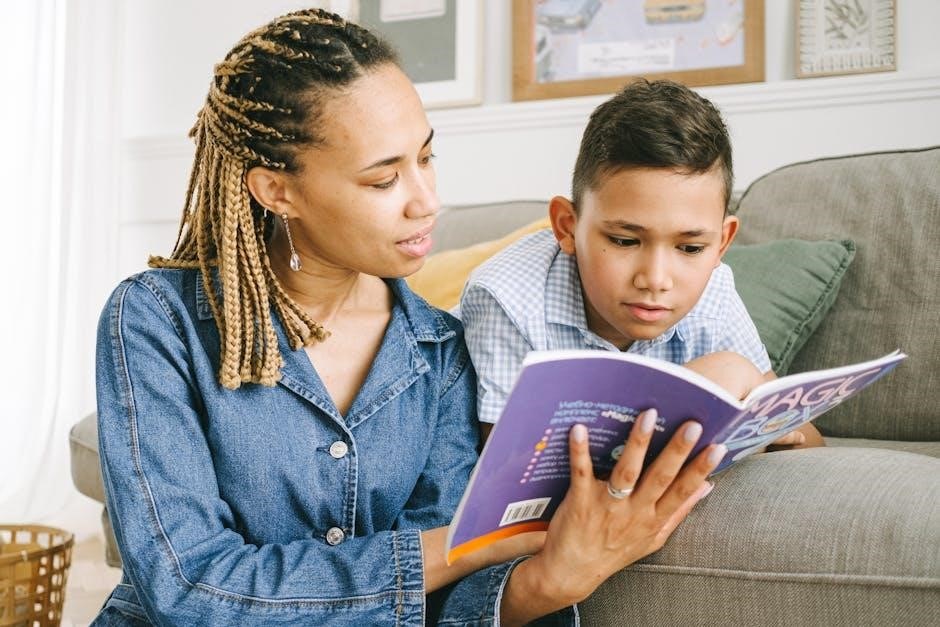
Ensure access to a wide range of reading materials, catering to diverse interests and reading levels, mirroring the variety of holidays observed across different regions.
Provide individualized support and scaffolding, adapting routines to meet each student’s specific needs. Foster a sense of community and belonging, where students feel safe to take risks and ask for help. A positive and encouraging environment is crucial for fostering a love of reading and promoting fluency development.
Leave a Reply
You must be logged in to post a comment.